
Minimally invasive surgical options for pilonidal sinus provide significant advantages over traditional open surgeries. These methods involve smaller incisions, leading to reduced pain, minimal scarring, and a quicker recovery.
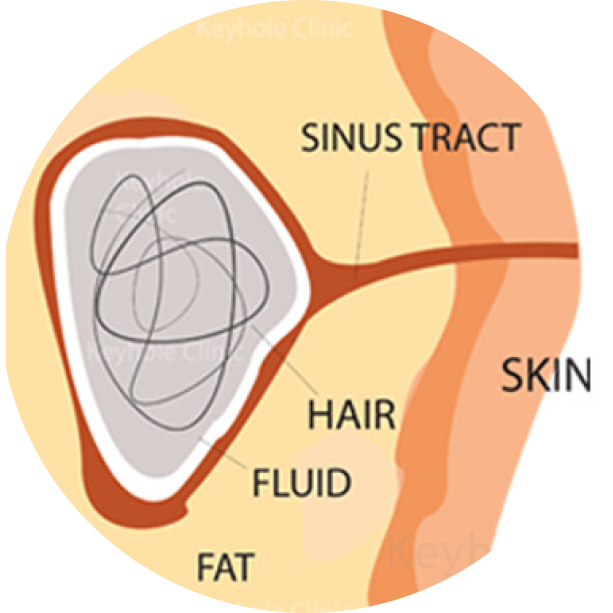
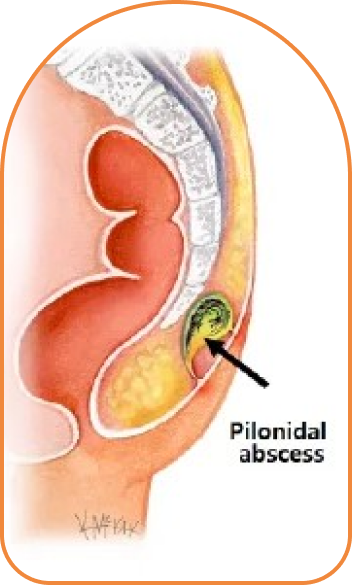
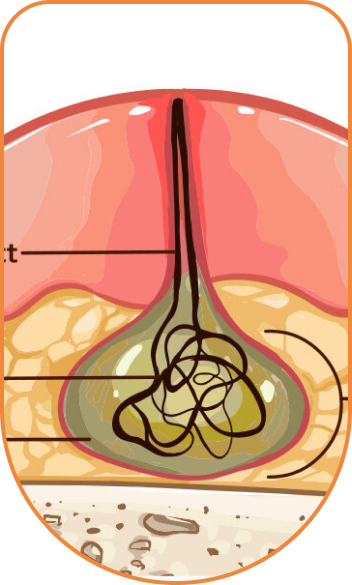
Pilonidal sinus is a chronic skin condition that commonly occurs near the tailbone and is characterized by the formation of a small tunnel or cyst. It may contain hair, skin debris, and cause discomfort, swelling, or infection, leading to pain and abscess formation. Surgical treatments have emerged as the most effective methods for addressing this condition, offering long-term relief and reducing recurrence rates. Modern techniques such as minimally invasive procedures significantly improve recovery times and patient outcomes compared to traditional open surgeries.
Persistent itching or irritation around the anus, which may be caused by hemorrhoids or other anorectal issues.
A noticeable lump or swelling around the anus, which may indicate hemorrhoids or other growths.
Difficulty controlling bowel movements or leaking stool, often seen in cases of rectal prolapse.
Endoscopic Anorectal Surgery is a minimally invasive surgical procedure used to treat conditions affecting the anus and rectum, such as hemorrhoids, anal fissures, or rectal prolapse. This technique uses an endoscope, a thin, flexible tube with a camera, which allows the surgeon to view the affected area on a monitor
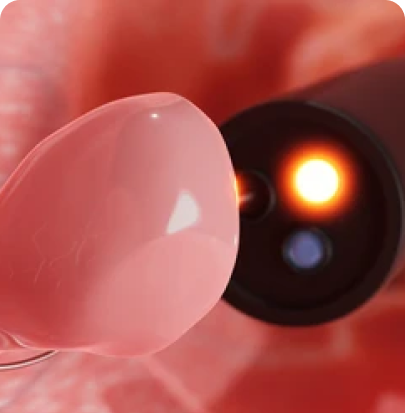
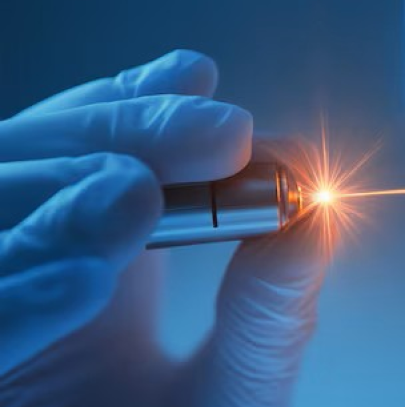
Minimally invasive surgery for pilonidal sinus involves either the endoscopic approach (EPSiT) or laser therapy:
Both techniques are performed under local or general anesthesia and aim to provide long term resolution of symptoms with minimal downtime.
Pre-Operative Consultation Patients undergo a thorough evaluation, including a review of medical history and imaging to assess the extent of the sinus.
Medication and Dietary Restrictions Patients are advised to discontinue medications such as blood thinners under medical supervision and follow fasting guidelines before surgery.
"I had been suffering from hemorrhoids and persistent anal fissures for months, which caused discomfort and pain, especially during bowel movements. After consulting with my doctor, I was recommended to undergo Endoscopic Anorectal Surgery as a minimally invasive option to treat my condition.
Sed ut perspiciatis unde omnis iste natus error sit voluptatem accusantium doloremque laudantium, totam rem aperiam.
Duis aute irure dolor in reprehenderit in voluptate velit esse cillum dolore eu fugiat nulla pariatur.